Among Ukrainians who have settled in Estonia, the main concerns remain finding work aligned with their qualifications and learning the Estonian language. Nevertheless, an increasing number of Ukrainians intend to remain in Estonia in the coming year, according to the SEIS (Socio-Economic Insights Survey) conducted in 2025 by the Estonian Refugee Council, the UN Refugee Agency (UNHCR), and the International Organization for Migration (IOM), which examines the socio-economic situation of Ukrainian refugees.
As of March 2026, more than 28,600 Ukrainian refugees in Estonia held temporary protection status, the majority of whom are women and children. In addition, 6,059 people of Ukrainian origin hold international protection status (subsidiary protection or refugee status), which has been granted to many Ukrainians who were outside Ukraine before 24 February 2022 and are therefore not covered by temporary protection. In total, nearly 35,000 Ukrainian citizens reside in Estonia under temporary or international protection.
The number of people with valid protection status is constantly changing, as some have returned to Ukraine or moved to other countries, while new arrivals continue to come to Estonia. Some Ukrainians have also transitioned from temporary protection to residence permits on other grounds, though socio-economic vulnerabilities are likely to remain. These tens of thousands of people have had to rebuild their lives in a completely new country, in a different cultural environment and often under uncertain conditions—finding housing, employment, childcare or schooling, and adapting to a new language and customs.
Ukrainian refugees in Estonia have arrived at different times. Some have lived here for more than four years, while others have only recently arrived. Some are currently applying for temporary protection, while others have already moved away from it after several years and now live in Estonia under different residence permits. This means that their integration journeys and needs vary significantly.
In spring and autumn 2025, a survey was conducted among 399 Ukrainians in Estonia, covering data on 990 individuals in total. Respondents have lived in Estonia for an average of three years, with an average age of 41. The majority (95%) live in urban areas.
Most respondents come from war-affected regions in northern and eastern Ukraine (15% from Kharkiv Oblast, 10% from Donetsk Oblast, and 16% from Kyiv city and Kyiv Oblast), and the majority are women (85%). Many households include children under 18 (29%) and older people over 60 (19%), highlighting the importance of access to quality education and healthcare.
We highlight the key findings below; the full English version is available on the UN Refugee Agency’s website.
Most Ukrainians plan to remain in Estoni
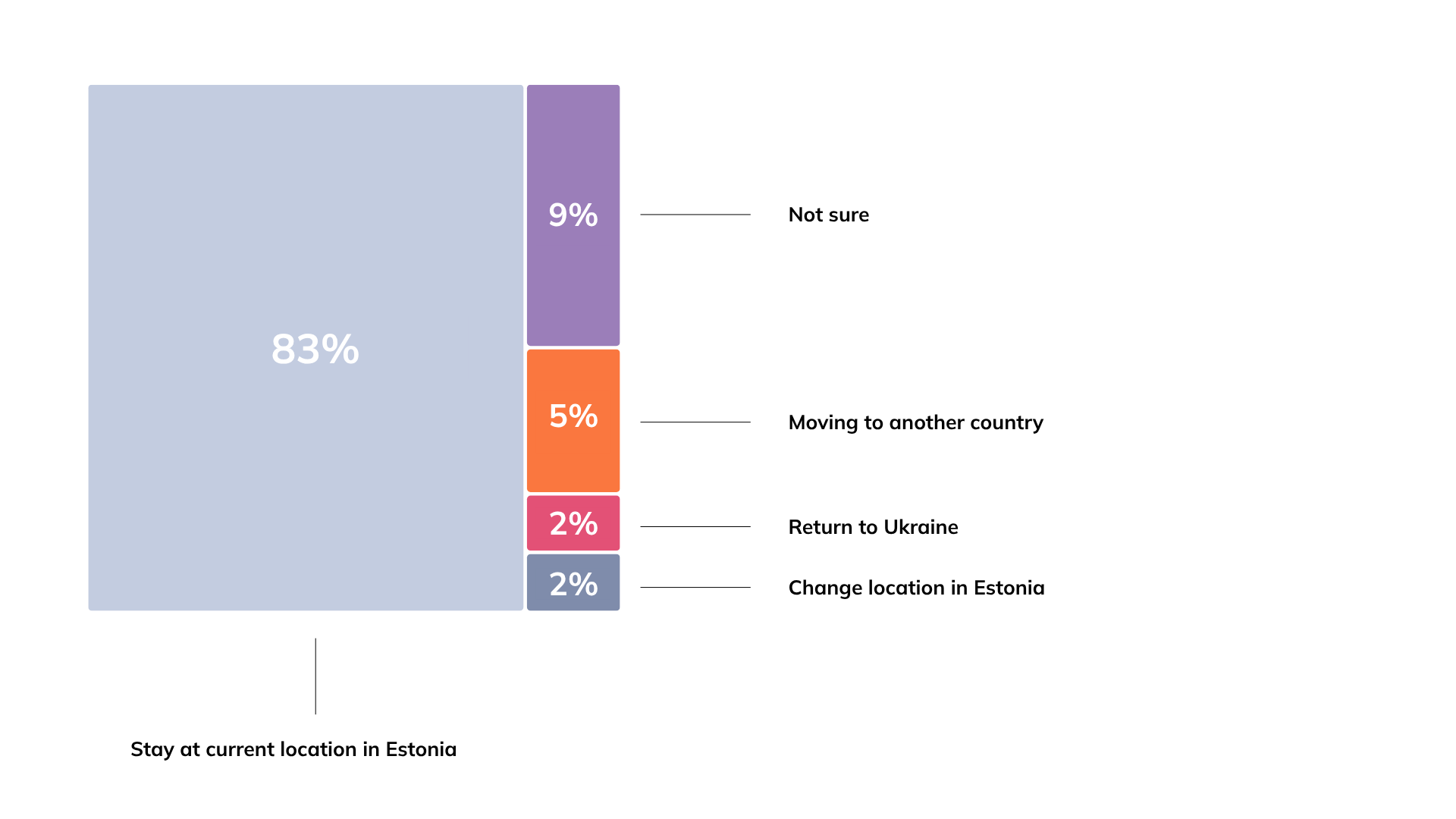
The majority of Ukrainians plan to link their future to Estonia, either in the near or long term, and this share has been increasing year by year. Compared to 2024, the proportion of respondents planning to stay in Estonia for the next 12 months increased by 6% in 2025. This trend is driven by the ongoing war and uncertainty in Ukraine.
Many respondents come from temporarily occupied areas or regions affected by active hostilities, making return unsafe. At the same time, many have already settled in Estonia: children attend school and adults are employed. As a result, an increasing number of people wish to remain in Estonia permanently.
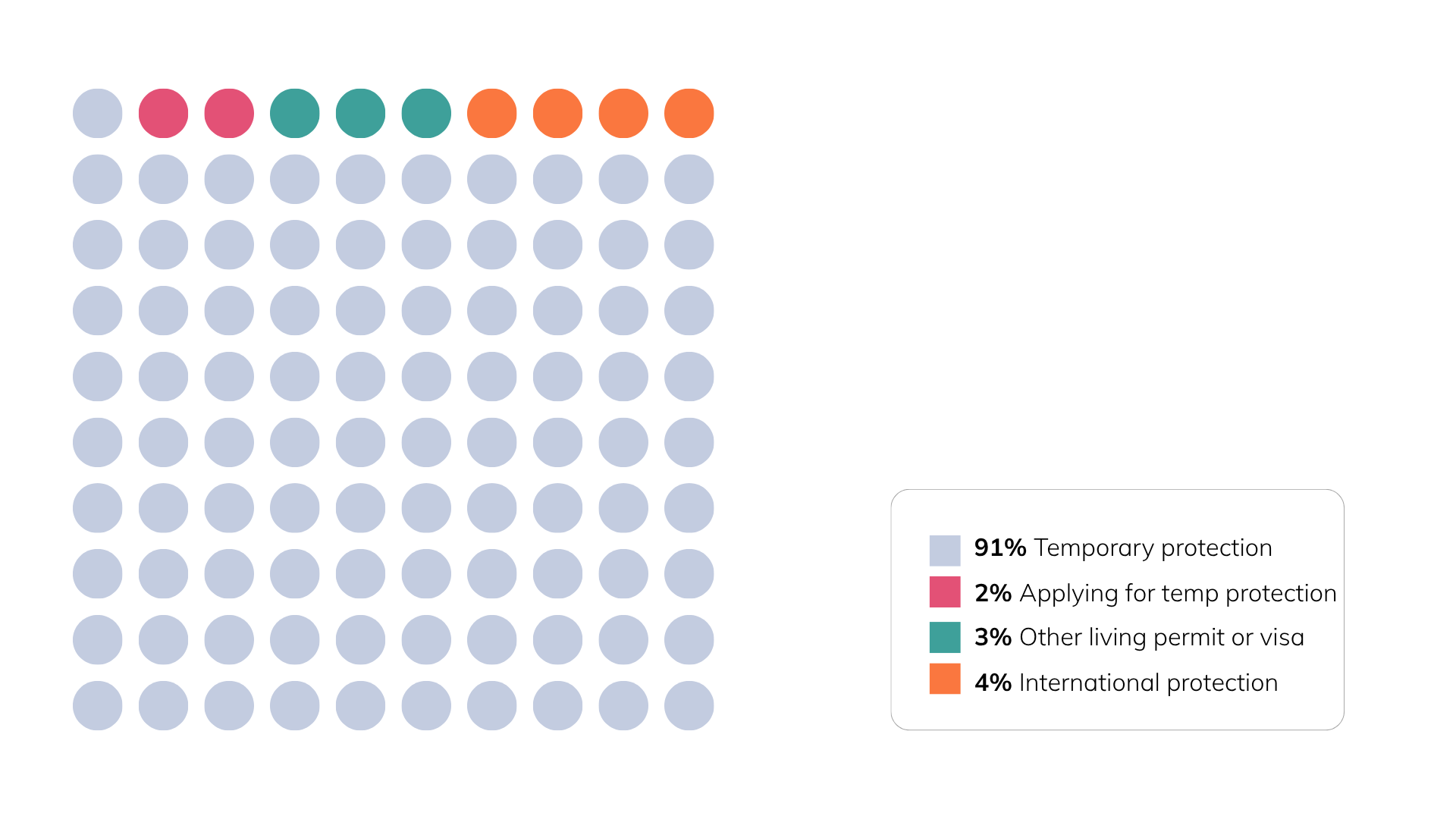
These future plans are also reflected in residence permit choices. At the time of the survey, 91% of respondents held temporary protection, 4% had international protection, and 3% held visas or residence permits on other grounds. Around 2% were in the process of applying for temporary protection.
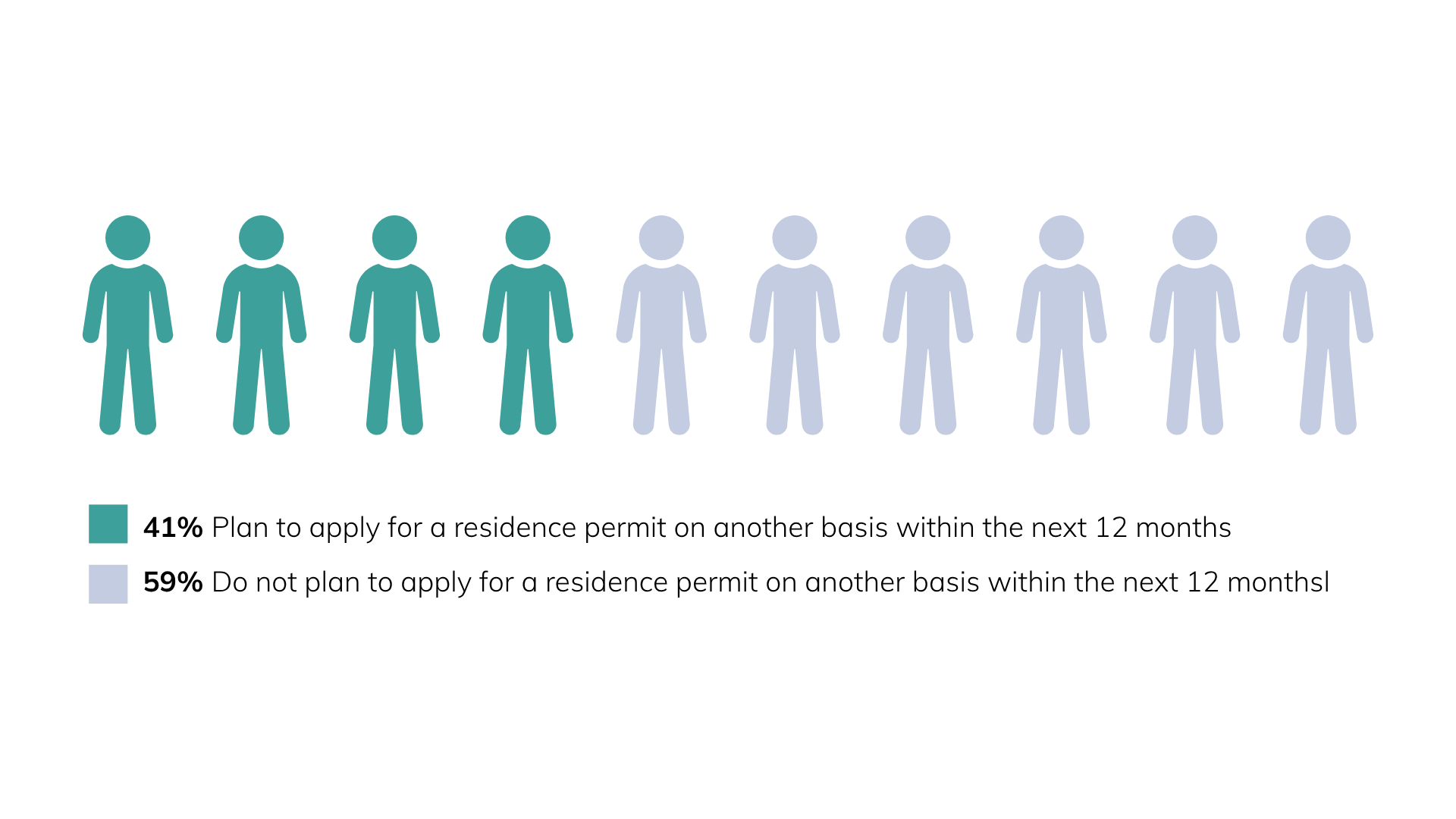
As of now, temporary protection is valid until March 2027. More than half of respondents preferred to maintain their current status over the next 12 months rather than apply for a different residence permit. However, 41% intended to apply for a residence permit on another basis within the next year, seeking longer-term stability in Estonia.
According to the Police and Border Guard Board, by April this year nearly 5,500 refugees had already transitioned from temporary protection to residence permits on other grounds.
It is essential to ensure that both people under temporary protection and the professionals supporting them have sufficient information to make timely and informed decisions about residence status. It is also important that vulnerable groups—such as older people and persons with disabilities—are not left without viable pathways to remain in Estonia. Each individual requires a tailored solution.
Among older people, maintaining health insurance is particularly important. 76% of respondents over 60 live with chronic health conditions, making continuous access to healthcare essential. Health insurance linked to temporary protection has so far ensured access to necessary services.
73% of surveyed households reported at least one urgent need they are currently facing while living in Estonia. The most commonly mentioned was employment and livelihood support, including monthly income (31%), indicating widespread financial insecurity. Other key needs included language courses (14%) and training or courses for adults (12%).
Long-term integration perspective: employment matching qualifications
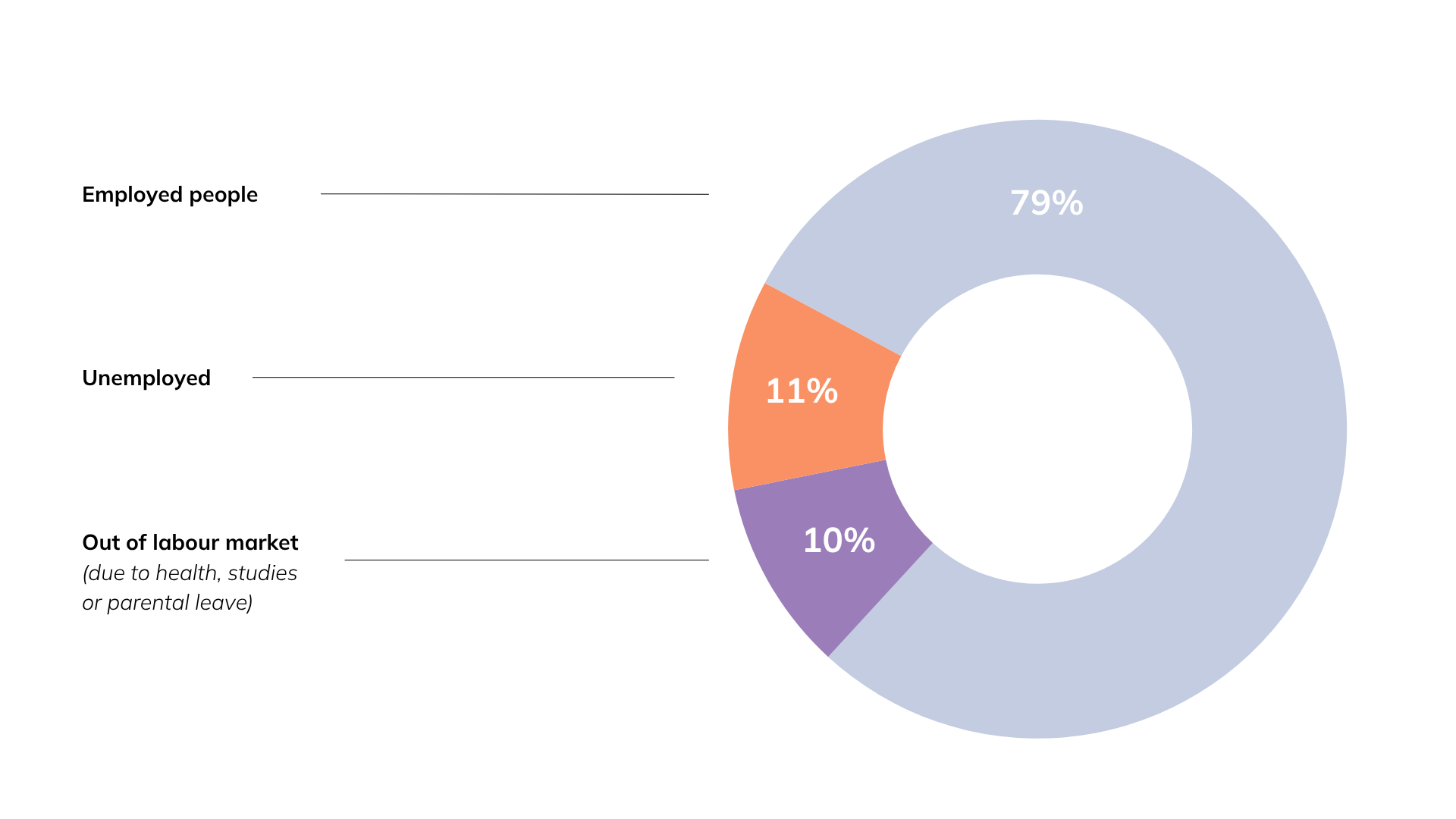
Among working-age Ukrainian refugees living in Estonia, employment is high and has increased by 14.5% compared to the previous year (2025 – 79% vs 2024 – 69%).
People from Ukraine make an important contribution to the local labour market. Of the 500 employed respondents covered in the survey, 16% worked in manufacturing, 15% in accommodation and catering, 13% in beauty, personal or home services, 11% in education, and 11% in construction.
At the same time, a key barrier to long-term integration for many refugees is the inability to find work that matches their education and experience. Among employed working-age respondents (aged 15–65), only 48% felt that their job corresponded to their qualifications, while 45% reported being overqualified for their current role.
Although Ukrainians living in Estonia are often highly educated (50% of working-age respondents held a university degree and 31% had vocational or technical education), their opportunities are mainly limited by insufficient language skills and the lack of recognised qualifications in Estonia.
It is important to support educated and experienced Ukrainians in progressing in their working lives, especially those who plan to remain in Estonia long term, by providing them with professional language training as well as upskilling or retraining opportunities that create value both for them and for employers. Many sectors in Estonia face a shortage of experienced workers, while at the same time there is already a significant pool of skilled professionals from Ukraine whose potential could be better utilised through appropriate training and support.
Shortage remains of suitable language courses and opportunities for language practice
52% of respondents said they would need language courses better suited to their level or more flexible schedules to participate more effectively in language learning alongside work and family commitments. Across Estonia, particularly outside larger urban centres, it has been repeatedly noted that the state-run Settle in Estonia Estonian language courses are available only online in smaller towns and rural areas. At the same time, many learners would prefer in-person classroom-based instruction, as it is seen as more effective and engaging.
39% of respondents said they do not have enough opportunities to practise the language in everyday life, an area where Estonians themselves can play an important role by creating more opportunities for interaction. In Ida-Viru County and Harju County, where Russian is widely spoken, a lack of an Estonian-speaking environment can also make it difficult for Ukrainians wishing to practise Estonian in daily life.
In addition, Estonian language skills and their development are influenced by each individual’s motivation to learn, which in turn is shaped by various background factors such as their connection to Estonia and future plans. The motivation of children and young people in language learning can be directly linked to their parents’ willingness to learn the language. Motivation is strengthened by the understanding that one intends to settle in Estonia long-term and build a life here—for example, by finding employment that matches one’s qualifications and participating in local cultural and social life. At the same time, uncertainty about the future and the possibility of returning to Ukraine may reduce motivation to participate in language learning. Motivation also depends on whether people come from temporarily occupied areas, where return is unlikely, or from areas under the control of the Ukrainian government and/or less affected by the war. The likelihood of return is also higher if family members have remained in Ukraine.
Language learning motivation can also be influenced and positively reinforced by the need to meet language requirements linked to residence permits. For example, foreign nationals may apply for a long-term residence permit after three years of residence in Estonia. This gives Ukrainian refugees the option to choose a long-term residence permit instead of temporary protection. However, according to legislative changes in force from the beginning of 2026, two additional requirements must be met when applying: completion of an adaptation programme and proficiency in the Estonian language at least at A2 level.
It is positive that, compared to the 2024 survey, the share of Ukrainians who feel they are able to communicate in Estonian has increased by 9%.
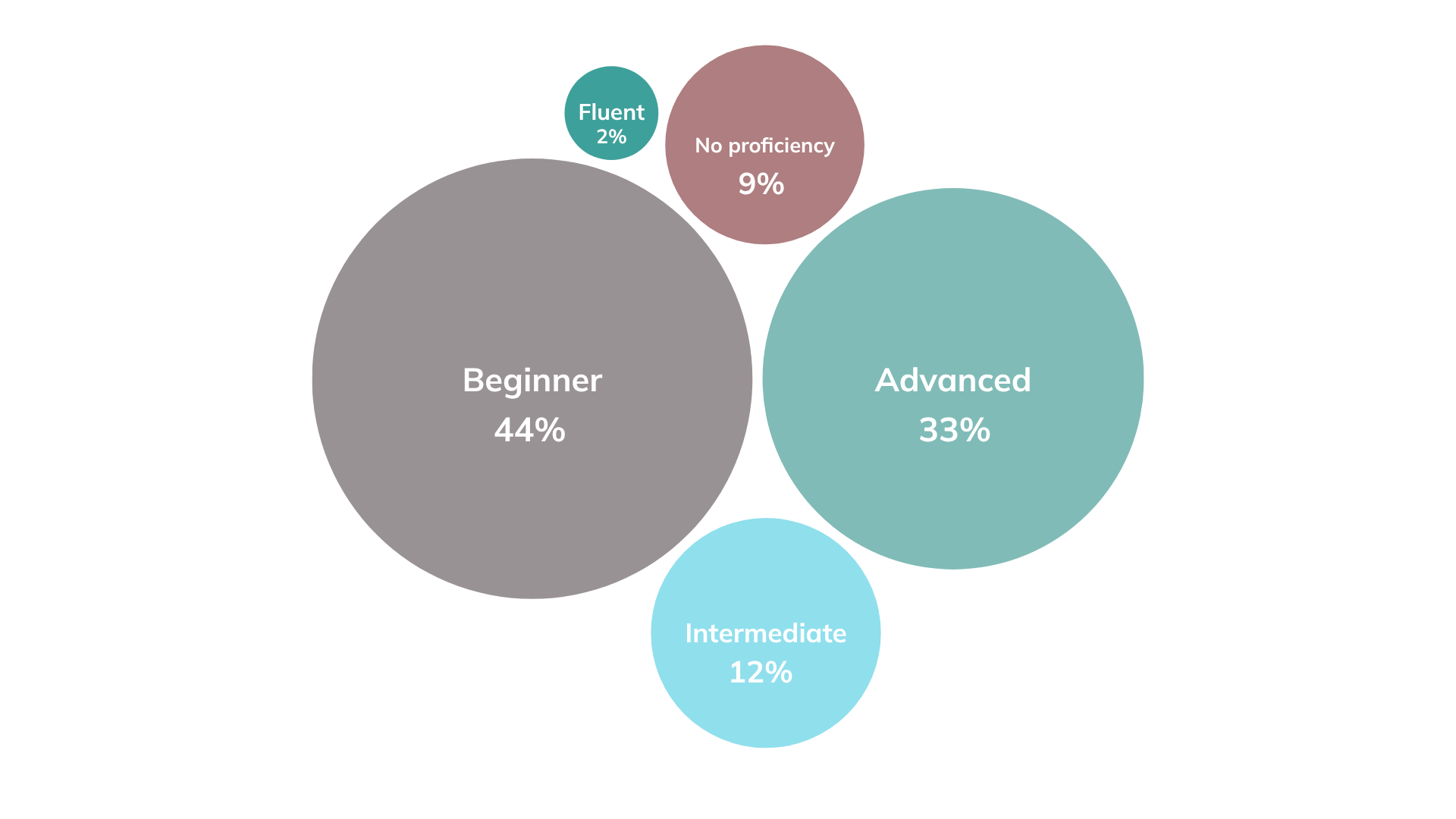
According to the survey, the best Estonian language skills are found among young people aged 12–17, who have likely learned Estonian as a second language within the Estonian education system. In fact, data collected during the 2024/25 academic year on school-aged children with refugee backgrounds show that as many as 99% of these children fulfilled their compulsory schooling requirements in Estonia, which is, by international comparison with other European countries hosting Ukrainian refugees, a very strong result for several consecutive years.
At the same time, language learning remains a serious challenge for young people under the age of 18 who are outside the Estonian education system. Many of them have already completed upper secondary education in Ukraine and are therefore not required to attend school in Estonia. As a result, they do not take part in school-based language learning, nor are they eligible for the state-run Settle in Estonia programme, which is intended for adults only.
Summary
The main findings of the survey show that the biggest challenges for the integration of Ukrainian refugees living in Estonia remain the language barrier and finding employment that matches their qualifications. At the same time, labour market participation is high – 79% of working-age respondents are employed and 90% are economically active – yet nearly half are unable to work in roles corresponding to their education and prior experience.
The majority of respondents, 83%, plan to remain in Estonia over the next year, an increase compared to the 2024 survey period. However, the longer-term outlook for Ukrainians in Estonia remains uncertain due to the ongoing war. People’s decisions are influenced both by the continued war in Ukraine and the fact that many have already built their lives in Estonia through work, education and community ties.
Language learning and everyday language practice remain key challenges, as in previous surveys. More than half of respondents require more flexible language courses, and many still lack opportunities to practise Estonian in daily life. At the same time, language proficiency is gradually improving, and the majority of school-aged children attend school, which supports long-term integration.